The Cham Museum: A Timeless Collection in Da Nang
Tucked away in a peaceful corner of Da Nang, the Cham Museum is a quiet sanctuary dedicated to a glorious, ancient civilization. It houses the world’s most extensive collection of Cham sculpture and artwork, offering a unique window into a culture that once thrived in central Vietnam for over 1,500 years.
A Legacy Carved in Stone
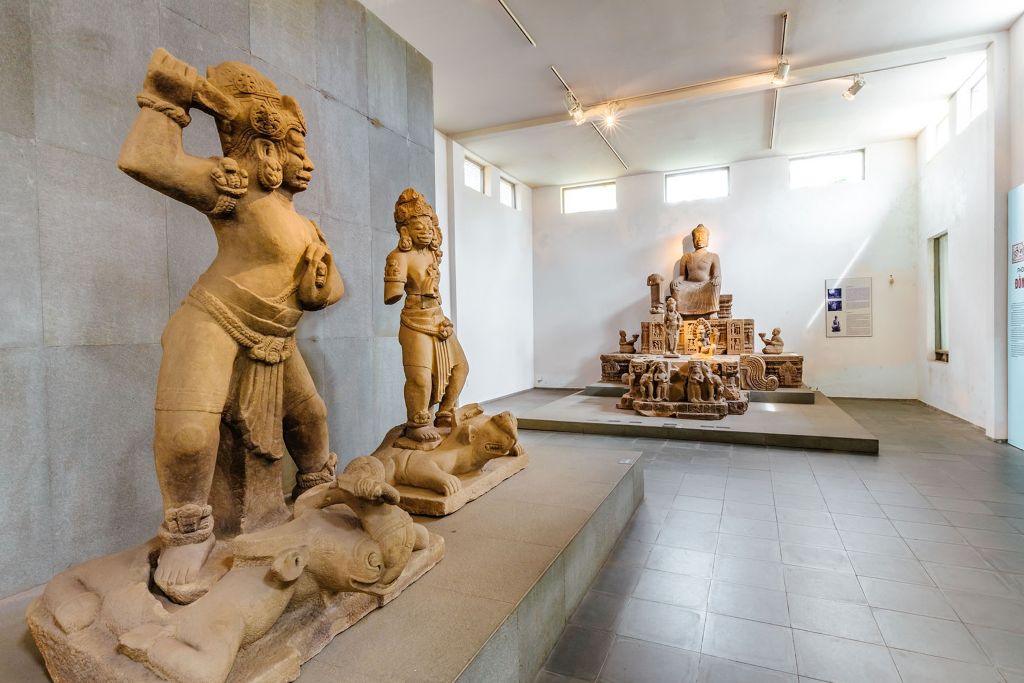
The museum’s collection is a stunning showcase of the artistic and spiritual genius of the Cham people. With nearly 300 pieces dating from the 7th to the 15th centuries, the exhibits are masterpieces of Hindu and Buddhist-influenced art. The sculptures, made from sandstone and terracotta, depict a world of deities, mythical animals, and graceful dancers with incredible detail and a profound sense of life.
The collection is meticulously organized into showrooms named after the archaeological sites where the pieces were discovered, such as My Son, Tra Kieu, and Thap Mam. This arrangement allows you to appreciate the evolution of Cham art over eight centuries, from its golden age to its eventual decline.
A French-Inspired Architectural Gem
The museum building itself is a work of art. Designed by French architects in 1915, its architecture cleverly blends French colonial style with the traditional motifs of ancient Cham temples. The building’s soft arches, gentle lines, and use of natural light create a serene and contemplative atmosphere that is the perfect setting for these timeless treasures.
Visiting the Cham Museum is more than just a historical tour; it’s a deeply moving experience. The artistry and craftsmanship of the pieces make you feel a connection to the artists who created them, a timeless link to a nation that was once a major force in Southeast Asia.
A Brief History of the Champa

According to Chinese chronicles, the Champa kingdom was founded in 192 A.D and had different names such as Lin-Yi, Huang-Wang and Chang-Chen. Its territories stretched from south of the Ngang Pass in Quang Binh Province to the delta area of the Dong Nai River in Binh Thuan Province. It included the coastal plains, highland and mountain ranges.
Influenced by the early Hindu civilization, the Champa kingdom was a federation of several smaller states called Mandala and comprised several ethnic groups.
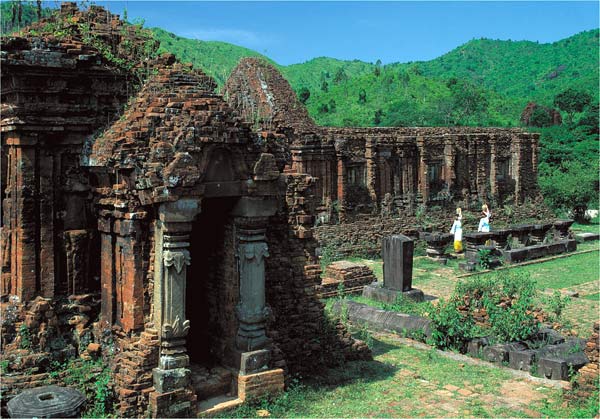
The most important legacy of the Champa kingdom is located in Central Vietnam in the form of brick temples and towers which are scattered over the coastal lowlands and highlands. The structures date from between the 7th and 8th centuries to the 16th and 17th centuries and are concentrated in Quang Nam, Danang, Binh Dinh, Khanh Hoa, Ninh Thuan and Binh Thuan.
The Cham Museum was built in Cham architectural style, using thin lines that are simple and gentle. The museum displays an intensive and diverse collection of Champa sculpture dating from the 7th to the 15th centuries, when a matriarchal society prevailed.
The museum was established at the end of the 19th century by the Ecole Francaise d’Extreme Orient with a collection of artifacts gathered in central Vietnam, from Quang Binh to Binh Dinh. They were then displayed at Le Jardin de Tourane on a small hill by the Han River. This is the site of the present museum. The building was designed by two French architects, Delaval and Auclair, in imitation of the most commonly used aspects of Champa towers and temples. At present, the museum displays approximately 300 sandstone and terra-cotta sculptures, among which some are made from terracotta. Most of the artifacts are masterpieces of Champa art and some are considered to be equal to works anywhere in the world. The sculptures were collected from Cham temples and towers throughout Central Vietnam, more specifically the area stretching from Quang Binh to Binh Thuan. All the sculptures are displayed in ten showrooms named after the localities where the pieces have been discovered.

After viewing the pieces in the showrooms, you can visit exterior exhibitions. The arts of the Champa were chiefly sculpture, but the sculptures are only part of the religious architecture. The temples and towers themselves are considered to be sculptural artifacts. They are decorated on the exterior of their brick walls with bas-relief columns, flowers and leaves and worshiping figures between brick pillars. The tympana, lintels and the ornamental corner pieces are of sandstones carved with the figures of gods, the holy animals of the Hindus and flowers and leaves.
The artifacts displayed at the museum are altars, statues and decorative works collected from Hindu and Buddhist temples and towers. Champa sculpture displays various styles. Sometimes they were influenced by other cultures but no matter at what period or in what style the Champa artifacts were made they always displayed original characteristics.
Visitors to the museum will have the opportunity to appreciate the eight centuries of evolution of Champa sculpture from its golden age to its decline. In their own way, the artifacts exemplify the rise and fall of the Champa civilization. When we stand before these artistic masterpieces we can comprehend the noblest ideal of art, the creation of the infinite from the finite. The eight centuries of art at the Champa museum is a thick history book reflecting the ups and downs of Champa art. From inanimate stones came living art, and from these wonderful invaluable artifacts we can get the feeling that the warmth from the Champa artists’ hand is still there, on the fine skin of the stone-timeless.
Lions
The sculptures displayed here almost have the same drifting life as the very destiny of the once-glorious culture that generated them. Through the ruins of time, war and even the oblivion, such original Champa sculptures were hardly collected and brought here by many human generations. And in this systematic collection, these works of the ancient Champa artists again have a new life.
Coming to visit the museum, it seems that you can see again the glorious time of the past of a nation for whom both the passion for art and the creative talent were already at a very high level. The mysterious world of deities, the pictorial legends, the religious symbols, the curving lines of the bodies of dancing girls, the features of full swelling breasts, the smiles of a vague time, all of these are shown very lively and in much in details.
The art of Champa, although influenced by the Hindu themes of India and Southeast Asia, has many elements that make it distinctive. Temples in Champa were made of bricks. As a result, artists did not have long expanses of wall to decorate with bas-reliefs depicting Hindu epics or phases of Buddhist life as seen, for example, at Angkor Wat. The Chams incorporated their sculptures into their temple architecture by carving them separately and making them part of the construction. These carvings are classified into four main groups: Icons; Pedestals; Pediments; Fragments of architectural decorations at the base or on various ties of the temple.
Profoundly influenced by the architecture and sculpture of the Indian civilization, the ancient Champa has a vision of life and religion according to their own feeling. Such refraction brought to their world of art a subtle and distinct beauty: spiritual and very close, unique and familiar… found at Cham museum Da Nang